How Does Fear Operate?
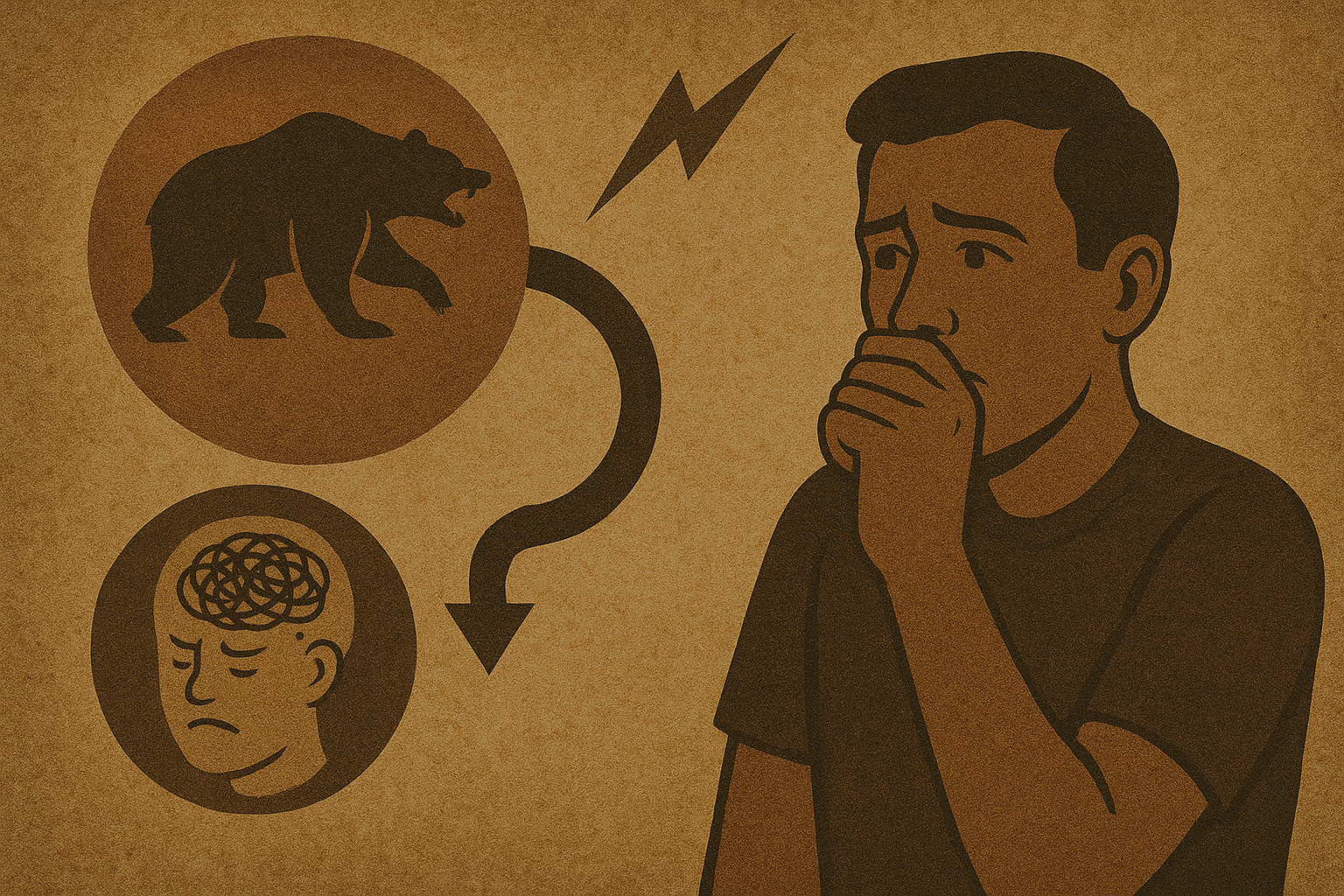
Fear-based thinking progressively increases the more we think about our fears. Although the effects on our body and mind are similar, there is a big difference between fear derived from real danger and fear derived from thinking about danger, which is referred to as mental fear.
Real fear is a reaction to an immediate threat. An example of real fear could be we are hiking in the woods, turn a corner, and there is a grizzly bear staring us down. It gets our attention and provides the energy to run, fight, or freeze to maximize our chances of survival. Fear arises in a matter of moments and dissipates within seconds after our attention shifts to dealing with the threat. Real fear is a neurophysiological and neurobiological response to an actual threat in the moment and only lasts until we feel safe again. Real fear is a rare occurrence for most of us. Mental fear focuses on the past and/ or future and lasts if we dwell on it.
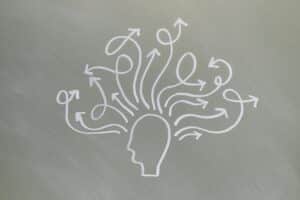
It’s important to understand how mental fear affects our brain. Scientists describe the brain as having the property of plasticity, being “plastic”. However, it is more accurate to say our brain is constantly evolving. Thoughts, perceptions, and experiences create neural pathways made up of connections between neurons and synapses. They are like roads in our brain. Just like driving a car or truck back and forth across an empty field will eventually create a path, and subsequently a road. Repeating a certain line of thinking has the same effect on our brain. When we allow fear to overcome us repeatedly, it becomes a habit, or a paved road, and becomes much easier to travel down. When we no longer travel down a particular path or road, it grows over and disappears in the weeds.
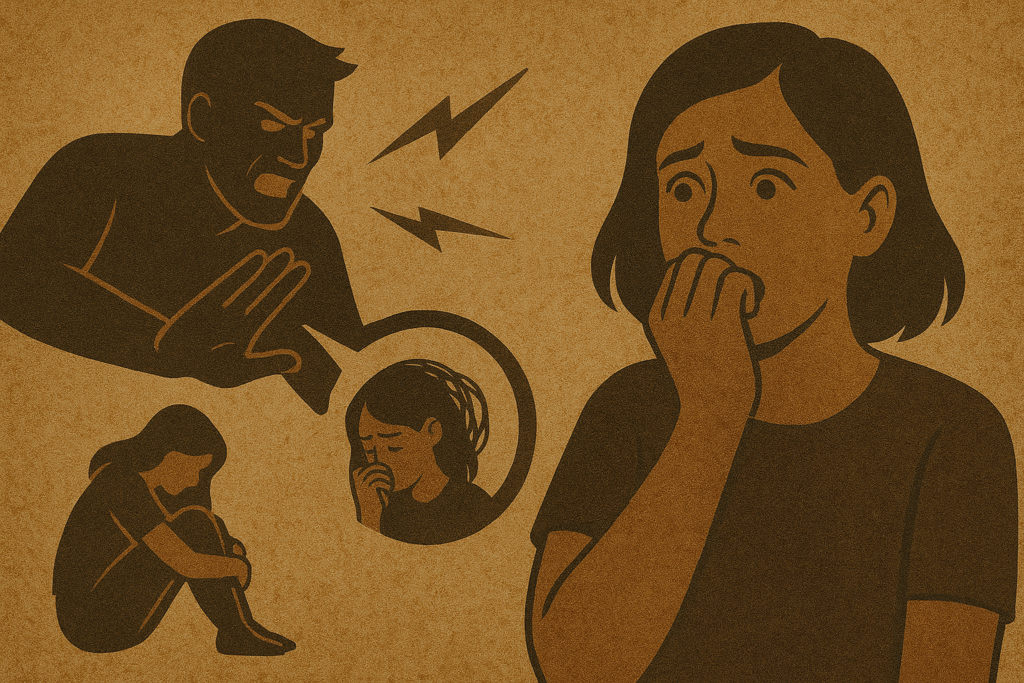
At any given moment, we are either creating new neural pathways in our brain or reinforcing old behavioral patterns. Pathways associated with fear are like highways; they are easy to access and allow us to move quickly because we depend on them for our survival. Messages of fear from the media and politicians repeatedly pull our thoughts down similar pathways, while keeping us from developing or building new pathways.
Stress, anger, frustration and exhaustion emotionally drain us, and attracts fear, much like iron ore to a magnet, which further strengthens fear-based thinking pathways. When we fail to utilize more positive neural pathways, those neural connections begin to fade, making them even harder to access.
As stress increases fear-based thinking gets reinforced, and alternative ways of thinking and perceiving disappear. We stop creating new pathways and reduce our ability to choose new pathways to expand our way of thinking. Thus, we become trapped in our own mind and lose our ability to think more creatively or utilize our intuitive senses. What is even more detrimental is the fact we are not even aware or conscious that we have given up our creative freedom. We just feel stuck. Our way of thinking in response to fear becomes our normal way of thinking in life.
What Can We Do About It?
Moving through fear-based thinking requires a shift in our understanding of fear. Most fear is false evidence appearing real. Fear is an illusion fueled by habitual worry, catastrophizing, and allowing past experiences to infiltrate the present. When we call out our fears, face our fears directly, instead of running from fear, they dissipate almost immediately. From this perspective we can use our inner resources to gain clarity and understanding as to the scope of the issue at hand, instead of jumping right to impulsive solutions or reacting without thinking. We are better able to focus on more effective ways to solve challenges. We learn to address adverse situations and conflict instead of avoiding them or dwelling on the worst-case scenarios.
Breaking the cycle of fear-based thinking allows us to clearly focus more on the details of challenges and visualize potential solutions. We can see the bigger picture. We respond rather than react or overreact. We learn to adapt, be more pliable, rather than resorting to old behavior or thinking processes. Focusing on the details of an issue or concern allows us to foresee potential obstacles, opportunities, and to find more creative solutions. We can restore our creative freedom and begin to work to solve problems by becoming more aware of our fear-based thinking behavioral patterns and learning to confront issues head-on.