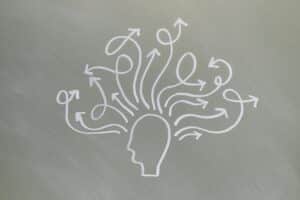

The question of whether humans actually have free will is one of the most enduring and debated topics in philosophy, neuroscience, and psychology. Yet, there is no universally agreed-upon answer. Here, I discuss free will from a Jungian viewpoint.
From a Jungian perspective, free will is real, but limited. The ego has some freedom in how it
responds, but most of what we think of as “choice” is strongly constrained by hidden influences
within the unconscious. The majority of our thoughts, feelings, behaviors, and actions come from
our unconscious. In other words, they are out of our conscious awareness. They include
automatic mental processes from past experiences, repressed memories, lifelong patterning, and
ancestral blueprinting. All of which are beyond our conscious control.
For Jung, the conscious (the ego) is only a small part of the larger psyche, which he referred to as
the Self, which encompasses both conscious and unconscious contents. Because the Self and its
unconscious dynamics can “act upon” the ego, like when something happens to us, our sense of
free choice often runs into internal limitations, just as it does with external circumstances. From
this viewpoint, the ego has freedom, but only within a narrow field of what it can clearly
perceive and admit to itself.
Jung stressed that complexes, archetypes, and the collective unconscious shape our motives and
decisions long before we are aware of them. These unconscious structures can even direct our
entire life, creating something like psychological “karma” or what we call our fate. This suggests
the ego’s will is more of a participant in a larger process than the actual controller.
Metaphysical debates suggest that we have a psychological “feeling of freedom” when making
choices. Psychologically, people experience themselves as freely making their own choices even
when those choices are bound by external necessity and inner unconscious facts. In this sense,
free will is not absolute independence from influence, but a limited zone of freedom inside a
much wider and complex network of causes and meanings.
From Jung’s viewpoint, individuation, the process of integrating unconscious material and
relating more consciously to the Self, is crucial to experiencing freedom. As we become more
aware of our shadow, our complexes (triggers, trauma, wounding), and our deeper values, we
can stop being blindly driven by them. We can begin to cooperate with the deeper direction of
our lives. This does not erase all limitations, but it does widen the field of the ego, granting the
ego more genuine responsibility and choice in how we live our lives.
In conclusion and from a Jungian viewpoint, we can say that we do not have absolute free will,
but we do have a meaningful, though modest, freedom that expands as we become more
conscious of the unconscious factors directing our lives. We can learn to align our choices with
the authentic Self, instead of being unknowingly ruled by them, by doing the deeper shadow
work and self-actualizing through the individuation process.

Philosophical Perspectives
Philosophers are divided:
- Libertarianism argues that humans do possess free will and can make genuine
choices independent of deterministic processes. - Determinism claims every event or action is the inevitable result of preceding
events, making free will an illusion. - Compatibilism suggests that free will and determinism are not mutually
exclusive—that humans can act freely even if their actions are determined by prior causes.
Neuroscience and Psychology
Neuroscientific research has found that some decisions seem to be initiated unconsciously before
our conscious mind becomes aware of them, which raises questions about whether conscious
control (and thus free will) truly exists. However, many scientists assert that consciousness still
plays a crucial role in decision-making, and that the brain allows for reflection and change of
intentions.
Cultural and Practical Implications
Different cultures, religions, and legal systems make assumptions about free will that affect
concepts like morality and responsibility. Even if our choices are heavily influenced by biology
and environment, most societies maintain the importance of personal accountability and the idea
that people are capable of making decisions.
In conclusion, whether we “have” free will often depends on how the concept is defined and
what evidence or perspective is emphasized. It remains an open topic with compelling arguments
on all sides.
Neuroscience
Neuroscience challenges the idea of free will primarily by revealing that many actions and
choices begin as unconscious brain processes before we become aware of deciding or acting.
Pioneering research, especially Benjamin Libet’s experiments, showed that the brain’s readiness
potential (unconscious neural activity) occurs several hundred milliseconds before a person
consciously reports deciding to make a movement. This suggests that what we consider a
“conscious choice” may actually arise from processes beyond our awareness, questioning
whether free, deliberate decisions truly originate in conscious intent.

Key Neuroscientific Findings
- Libet’s Experiments: Libet’s work used EEG readings to show unconscious
neural preparation precedes conscious decisions, indicating that the act of deciding may be a
post-hoc attribution rather than a true act of free will. - Priming Studies: Research by John Bargh demonstrated that subtle, unconscious
cues in the environment can influence behavior in ways subjects do not realize, casting doubt on
the independence of choices. - Predictability and Determinism: Advances in neuroscience, including machine
learning models, have allowed for the prediction of choices based on observed brain activity
before individuals report making those choices. This suggests decisions may follow deterministic
patterns based on prior causes, including genetics and environment.
Veto Power and Ongoing Debate
Some neuroscientists, including Libet himself, argue that while unconscious processes may
initiate action, the conscious mind retains a “veto” or ability to override these impulses at the last
moment. This idea, known as “free won’t,” leaves open a space for conscious intervention in
otherwise automatic processes. The debate continues, as recent critiques argue these studies
focus on trivial decisions (like pressing a button) and may not generalize to complex, meaningful
choices, leaving the door open for some form of conscious free will
Overall, neuroscientific evidence has sparked significant debate about the reality and nature of
free will, challenging the traditional notion that our conscious intentions are solely responsible
for our actions
The strongest neuroscientific rebuttals to claims that free will does not exist focus on important
limitations and reinterpretations of the experiments most often cited against free will.
Benjamin Libet’s experiments primarily measured the timing of unconscious brain activity
(specifically, the readiness potential) relative to conscious intention and voluntary movement.
Participants were asked to make simple movements, like flexing a finger or pressing a button,
whenever they felt the urge, while an EEG recorded their brain activity. At the same time, they
reported the exact moment they became aware of their urge or intention to act by watching a dot
move around a clock face and noting its position when the urge first appeared.
The experiments showed that the readiness potential—a ramp-up of neural activity—began
several hundred milliseconds (typically about 350–500 ms) before participants reported
awareness of their intention to act, and well before the movement itself. This finding suggested
that unconscious processes in the brain initiate actions before we become
Limitations of Predictive Experiments
- Many neuroscientific studies—particularly those following Libet’s paradigm—
only deal with trivial, immediate, and repetitive choices (like pressing a button at random),
which are unlikely to capture the complexity or significance of real-life decision making. - Machine learning models that claim to predict choices before conscious
awareness often achieve only modest accuracy (near 60%), which may reflect broad tendencies
or inclinations, not the deterministic loss of agency. Real-life predictions remain imprecise,
leaving room for conscious intervention and free will.

Methodological Critiques
- Recent research has shown that the neural activity (“readiness potential”) used to
argue against free will might be better interpreted as reflecting random fluctuations in brain
signals rather than a definite unconscious decision to act. - Experimental design and data analysis can produce misleading interpretations,
including temporal “leakage” where information from the future influences results, and the
potential for overfitting models to noise rather than true decision-related signals.
Complexity of Real Decisions - Real-world choices involve ongoing, deliberative processes shaped by experience,
values, and reflection. The simplicity of laboratory tasks does not reflect the dynamics of
conscious will involved in meaningful actions. - The brain’s complexity surpasses our current ability to predict its future states,
analogous to the difficulty of predicting the weather more than a few days in advance—
suggesting the room for uncertainty and agency remains significant.
Possibility of “Veto Power” - Some neuroscientific evidence supports the idea that, even when unconscious
processes initiate actions, conscious awareness may exert a veto—preventing or modifying those
actions in the last moments before execution, a phenomenon sometimes called “free won’t”.
Overall, these rebuttals argue that neuroscientific evidence has yet to conclusively show that
humans lack conscious free will, particularly regarding meaningful choices and long-term
deliberations.
Several recent studies provide evidence of neural activity that is compatible with conscious
choice and decision-making, rather than simply reflecting unconscious, automatic processes.

High-Level Choice Encoding
A 2022 study from Caltech examined brain activity in the posterior parietal cortex (PPC), a
region linked to encoding intentions. The researchers found that neural signals specific to a
person’s decision to act appeared only when participants chose to engage in a task. This activity
began before conscious awareness but was distinct to trials where a person made a deliberate
choice, indicating that the brain prepares for selected actions in a way aligned with conscious
intent. The planning signals did not themselves make the choice; rather, they supported the
execution of a consciously chosen action, reinforcing the interpretation that conscious and
unconscious processes cooperate rather than compete in decision-making.
Thalamic and Cortical Coordination
A 2025 study observed simultaneous neural activity in the thalamus and the prefrontal cortex
during tasks requiring conscious awareness of thoughts. Neural signals associated with conscious
perception were coordinated between these regions and occurred earlier and more strongly when
participants reported awareness. This suggests that the brain’s thalamic structures help filter
which thoughts become conscious, implying a neural basis for conscious choice and awareness
rather than entirely automatic processing.
Stable Neural Patterns During Conscious Experience
Additional research published in 2025 found that sustained and stable patterns of neural activity
are a common marker for conscious experience, supporting the idea that intrinsic brain networks
maintain states compatible with both wakefulness and intentional actions. These stable patterns
are seen as neural correlates for conscious, integrated decision-making, rather than purely
reflexive behavior.
These studies show that specific and coordinated neural activity tracks with both conscious
awareness and the execution of voluntarily chosen actions, offering robust neuroscientific
support for the compatibility of neural function and conscious choice